
If you’ve driven, or been driven, along the Great Ocean Road, you’ve probably noticed something. Every large coach tour stops at almost the same places. The Twelve Apostles. Loch Ard Gorge. Maybe Kennett River for the koalas. That’s not a coincidence, and it’s not because those are the only good spots. It’s because a 12.5-metre coach carrying 50 people physically cannot access or park at many of the Great Ocean Road’s best lookouts.
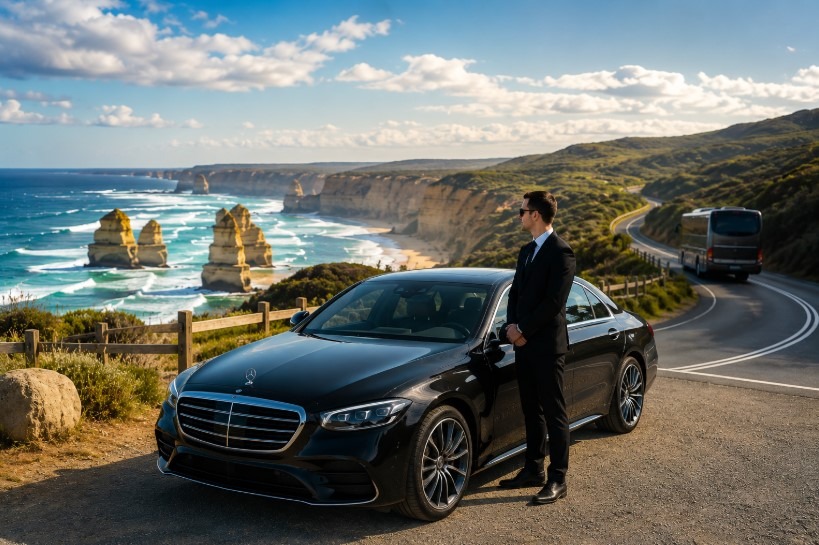
One of the least-discussed facts about touring this stretch of Victorian coastline. Chauffeur car services in Melbourne and surrounding suburbs exist precisely because of this gap — a private sedan or SUV can reach car parks, laneways and lookout access roads that a full-size tour bus simply can’t navigate or fit into. This article explains exactly which places we mean, why the restriction exists, and what it actually looks like to plan a Great Ocean Road day around a private vehicle instead of a scheduled coach seat.
Why Every Big Coach Follows the Same Route
Large coach tours aren’t being lazy when they stick to the same handful of stops. They’re working within real physical constraints that most travellers never think about until they’ve experienced them firsthand.
According to Great Ocean Road Regional Tourism, not every viewpoint along the route is clearly marked with a large sign or a car park, and many of the most memorable stops are found down short side roads, on quiet beaches, or at clifftop lookouts rather than at the marquee attractions. A coach operator planning a fixed daily itinerary for 50 passengers has to prioritise stops with guaranteed large-vehicle parking and a turning circle wide enough to get the bus back out again. That rules out a lot of places before the day even begins.
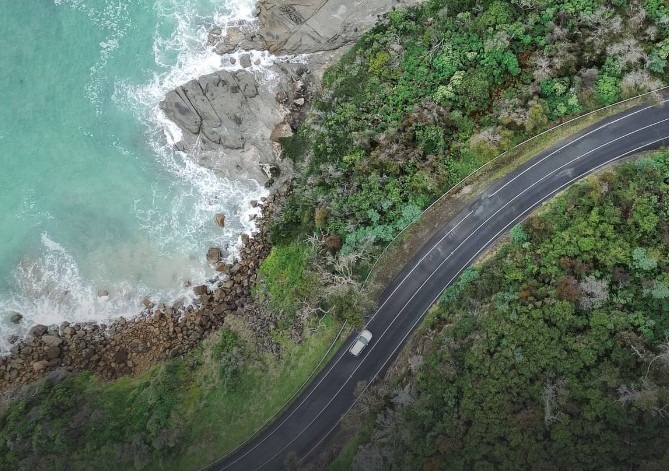
VicRoads’ official Great Ocean Road driving guidance also makes the underlying road conditions clear: much of the route is narrow and winding, particularly through the Otway Ranges, and speed needs to be adjusted constantly to match the conditions. A road built for cars navigating tight bends safely is not a road designed with 50-seat coaches in mind.
The Lookouts Large Tour Buses Physically Can’t Reach
Here are specific, real examples — not vague claims — of places where vehicle size determines whether you can actually get there.
Gibson Steps
Gibson Steps sits close to the Twelve Apostles and gives you ground-level views of the Gog and Magog rock stacks, plus 86 steps down to the beach itself, as detailed by Tourism Australia’s official travel guide. The problem for large groups is the car park.
Great Ocean Road Regional Tourism notes that parking here is limited, and it’s illegal to park along the Great Ocean Road itself next to the solid yellow lines that run past the site. A coach simply doesn’t fit. Most coach tours skip Gibson Steps entirely or, at best, allow passengers a short walk from the main Twelve Apostles car park instead.
Erskine Falls
Ten minutes inland from Lorne, Erskine Falls is one of the tallest waterfalls in the Otways, dropping around 30 metres into a fern-lined gully, as described by Parks Victoria, the state government agency responsible for managing the site. Getting there means a steep, narrow access road that most coach operators avoid altogether, which is why organised bus tours rarely include it on their itinerary. It’s a stop that largely belongs to travellers with their own vehicle, or with a driver who knows the road.
Live Wire Park and the Sheoak Falls Walk
Just off the same Erskine Falls access road, Live Wire Park explicitly tells visitors that on-site parking is limited and asks guests to stay within marked bays, a clear sign this isn’t a site built to accommodate large-vehicle turning circles. The nearby Sheoak Falls walking track, which winds from the coastal woodland at Sheoak Creek through wet forest, is another example of a genuinely rewarding stop that simply isn’t practical for a 50-seat coach to work into a tight daily schedule.
Teddy’s Lookout, Lorne
Teddy’s Lookout offers one of the best panoramic views of the Lorne coastline, reached via a short walk from a small car park above the town. It’s the kind of stop that rewards a five- or ten-minute detour, exactly the sort of flexible, small-scale addition that a fixed-route coach itinerary has no room for.
Cape Patton and the Smaller Coastal Pull-Offs
Between Lorne and Apollo Bay, the road climbs and hugs the cliff face, with the Otway Ranges rising on one side and steep drops to the water on the other. Along this stretch, numerous small, informal pull-off points offer genuinely spectacular views but weren’t built with large-vehicle turning circles in mind. Coach itineraries tend to treat this section as a scenic drive-through rather than a stopping zone, which means passengers see it through the window rather than standing at the lookout itself. A private vehicle can pull in at these smaller bays without holding up traffic behind it, something a 12.5-metre coach genuinely cannot do safely on a narrow, winding section of road.
Mait’s Rest and the Rainforest Boardwalks
Tucked into the Great Otway National Park between Apollo Bay and Cape Otway, Mait’s Rest is a short, all-abilities boardwalk loop through ancient myrtle beech and mountain ash forest. It’s the kind of stop that rewards a 20-minute detour rather than a scheduled photo stop, and its car park fits regular vehicles, not a fleet of coaches arriving at once. On a fixed coach itinerary with a strict return time to Melbourne, operators often cut this genuinely flexible 20-minute forest stop first, simply because the schedule has no slack to add it back in.
What Victoria’s Own Road Safety Guidance Actually Says
This isn’t a marketing exaggeration about “hidden gems.” It’s confirmed by the government body responsible for the road itself. VicRoads’ safe driving guidance for the Great Ocean Road points out that driving times can take longer than expected because of the road’s varying and often narrow, winding conditions, and it encourages drivers to plan extra time into their journey accordingly.
Separately, Great Ocean Road Regional Tourism’s own road safety page advises drivers to pull completely off the road at a safe location before stopping to look at the view, rather than stopping on the road itself. That single piece of guidance says a lot about why large vehicles are restricted to designated, purpose-built car parks rather than the smaller pull-offs and laneway car parks scattered along the route.
None of this is about the Great Ocean Road being unsafe. It’s a well-maintained, sealed road for its entire length. The issue is scale: a road engineered for regular car and light-vehicle traffic, with intermittent passing bays, simply wasn’t built to also accommodate large coaches stopping at every worthwhile lookout.
How a Private Chauffeur Changes What’s Actually Possible
This is where the difference between a scheduled coach tour and a private, chauffeur-driven day genuinely shows up — not in comfort or luxury branding, but in where you can physically go.
A private sedan or SUV can:
- Pull into small, single-lane car parks like the one at Gibson Steps
- Handle the steep, narrow descent to Erskine Falls without needing a wide turning circle
- Make a five-minute detour to Teddy’s Lookout without disrupting a fixed group schedule
- Adjust the day’s pace around tide times, weather, or how long you want to spend at any one stop, rather than a bus timetable built around 50 people’s schedules
This is genuinely useful information whether or not you ever book a chauffeur — even self-driving travellers benefit from knowing which stops are realistically only reachable by car. But it’s also the practical reason chauffeur car services in Melbourne and surrounding suburbs are worth considering for a Great Ocean Road day specifically: it’s not just about comfort; it’s about access to places a coach itinerary could never include in the first place.
Planning a Great Ocean Road Day Around a Private Vehicle
If you’re weighing up a coach tour against a private chauffeur for this specific stretch of coastline, a few practical points from the sources above are worth keeping in mind when you plan your day.
- Build in real time, not just travel time. As VicRoads’ own guidance notes, the narrow and winding sections of this road mean journeys often take longer than the map suggests. A private vehicle lets you set your own pace rather than working backwards from a coach’s fixed return time.
- Decide your priority stops before you leave. Because the road isn’t densely signposted at every worthwhile detour, it helps to know in advance whether Erskine Falls, Gibson Steps, or Teddy’s Lookout matter to you, so your driver can build them into the route from the start rather than trying to retrofit them later in the day.
- Factor in tide times for beach-level stops. Gibson Steps in particular is exposed to Southern Ocean swell, and conditions can change quickly, a detail Great Ocean Road Regional Tourism flags directly on their Gibson Steps page. A flexible schedule matters here more than it might seem.
- Ask about vehicle type for the Otways sections. The steep, narrow roads inland from Lorne (like the Erskine Falls access road) are better suited to a standard sedan or SUV than a larger van, simply due to the width and gradient involved.
Tips for Choosing the Right Vehicle
Not every private vehicle option handles these conditions equally well, so it’s worth knowing what to ask for.
A standard executive sedan is well suited to the sealed, narrow sections of the road, including the Erskine Falls access road and the smaller car parks at Gibson Steps and Teddy’s Lookout. If you’re travelling as a larger group, a mid-size SUV still fits comfortably into most of these smaller car parks while giving you more luggage space for a full-day trip, which matters if you’re planning to stop for lunch, a rainforest walk, or a beach visit along the way.
Whatever vehicle you choose, the key advantage over a coach tour isn’t really about the car itself. It’s about a driver who can adjust the day’s plan in real time, based on the road conditions and lookouts described above, rather than following a printed itinerary built around what a 50-seat bus can access.
Coach Tour vs. Private Chauffeur
It’s worth being specific about what you’re trading off between the two options, rather than assuming one is simply “better” than the other.
- On a large coach tour, you leave Melbourne with a fixed itinerary. Operators time each stop to the minute so the group returns on schedule, which typically means brief visits of 10 to 30 minutes even at major attractions, as several Great Ocean Road tour operators note in their own published itineraries. Operators generally don’t offer detours to smaller sites like Erskine Falls or Teddy’s Lookout, not because they don’t want to include them, but because the vehicle can’t reach them or the schedule has no room to spare.
- On a private chauffeur-driven day, the itinerary is built around where you actually want to go, including the smaller lookouts a coach can’t reach. You’re not sharing a 50-person schedule, so a longer stop at Gibson Steps to wait for better light, or an unplanned pull-in at a coastal lookout between Lorne and Apollo Bay, doesn’t cost anyone else their day. The trade-off is cost: a private vehicle for a full-day Great Ocean Road trip costs more per person than a seat on a shared coach, particularly for a solo traveller. For groups of three to six people splitting the cost of a private vehicle, the gap narrows considerably.
Frequently Asked Questions
Q1: Why don’t Great Ocean Road coach tours stop at Erskine Falls?
Ans: The access road is steep and narrow, and the car park isn’t sized for large vehicles. Most coach operators route around it entirely rather than risk the descent.
Q2: Do Gibson Steps included in standard bus tours?
Ans: Rarely, or only as a short walk from the main Twelve Apostles car park. The dedicated Gibson Steps car park is too small for a coach, and solid yellow lines prohibit parking along the adjacent stretch of road.
Q3: Can a private chauffeur reach every lookout on the Great Ocean Road?
Ans: Most of them, yes. Standard sedans and SUVs can access the sites outlined above. A small number of walking-only tracks (such as sections of the Great Ocean Walk) aren’t accessible by any vehicle, coach or private car alike.
Q4: Is a private chauffeur worth it for a solo traveller?
Ans: It depends on priorities. If reaching specific smaller lookouts matters more than cost, yes. If budget is the main factor and the major sites (Twelve Apostles, Loch Ard Gorge) are the priority, a shared coach tour remains a reasonable option.
Q5: Which Melbourne suburbs do chauffeur car services cover?
Ans: Chauffeur car services typically cover the CBD, inner suburbs, and outer areas including [e.g. Craigieburn, Doncaster, Sunbury, Chadstone, Kew, South Yarra, Toorak, Malvern, Dandenong, and more], with airport transfers extending to Tullamarine, Avalon, and Essendon Airport.
Q6: Do chauffeur car services in Melbourne provide child seats?
Ans: Yes, most Melbourne chauffeur companies offer Australian-standard compliant child seats on request at no or low extra cost.
Q7: What’s the difference between a chauffeur service and a taxi in Melbourne?
Ans: A chauffeur service is a pre-booked, fixed-price trip with a licensed professional driver and a higher-grade vehicle, while a taxi is an on-demand, metered ride with variable pricing.
Overall Summary
Large coach tours aren’t cutting corners when they skip places like Gibson Steps, Erskine Falls, or Teddy’s Lookout. Victoria’s road authority and the region’s own tourism body confirm the real physical limits at play: narrow roads, steep gradients, and car parks too small for 50-seat vehicles. If reaching those specific spots matters to you, a private vehicle isn’t a luxury upgrade so much as the only practical way to actually get there.
Travelers weighing up how to spend a day on the Great Ocean Road, that’s the real, practical difference chauffeur car services in Melbourne and surrounding suburbs offer over a standard coach seat: not just comfort, but genuine access to the parts of this coastline that a large bus was never going to reach in the first place.
Related informative content that people need to be aware of: Melbourne chauffeur touting 2026
